
A practical look at the problem
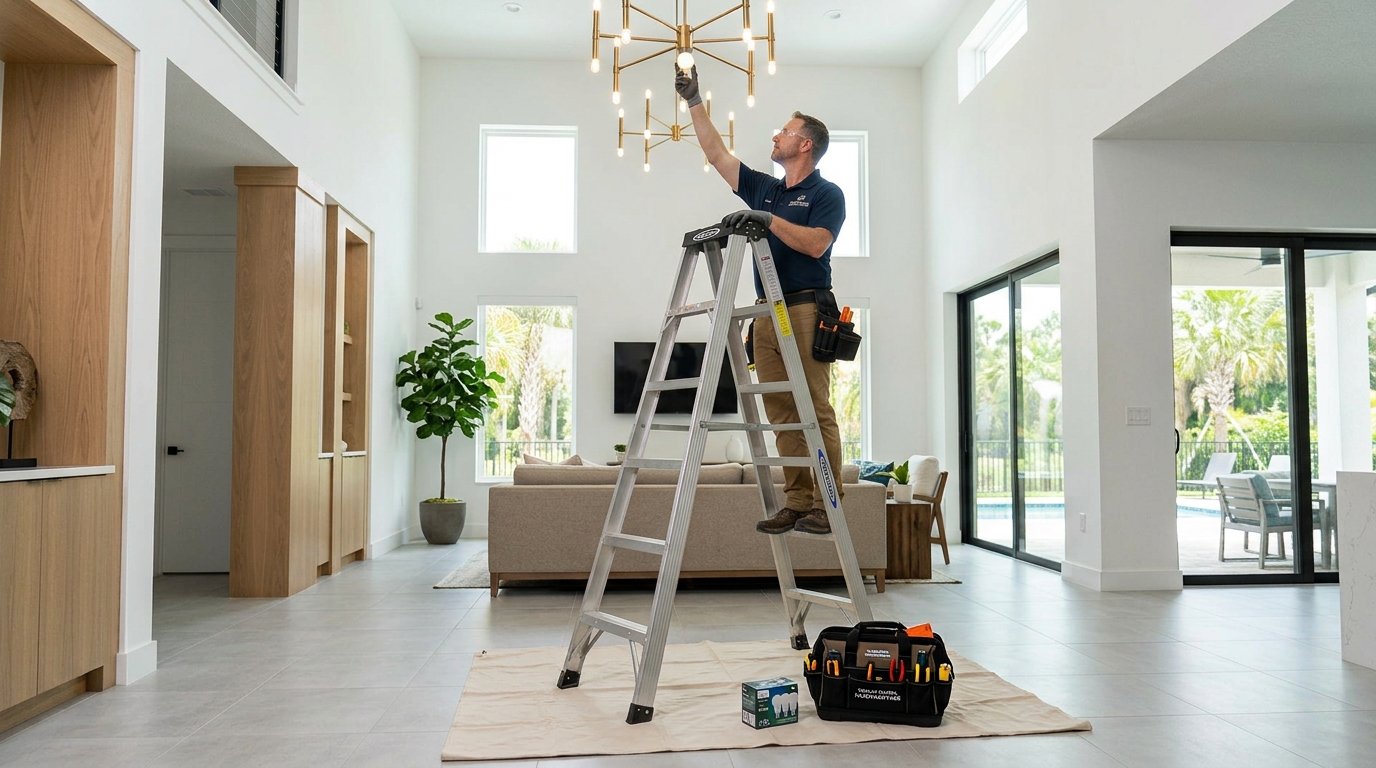
High-Ceiling Light Fixture Installation in Wesley Chapel, FL
If a light fixture needs to be replaced where safe access is more demanding, the right repair starts with finding out why the first condition developed—not just covering the symptom.
Signs the issue needs a closer look
- The fixture is above a tall foyer
- Stairs complicate ladder placement
- The fixture is large or delicate
- Assembly must happen overhead
Why this happens
High fixtures are less forgiving because access, ladder position, fixture weight, and assembly all matter. The mounting location also needs to be suitable for the replacement fixture.
What you see on the finished surface is only part of the story. Good repair work checks the surrounding area, fastening points, nearby moisture signs, and the way the part moves or carries weight. That helps avoid repeating the same weak repair.
Risks of waiting
Improvised access increases fall risk and makes a delicate fixture harder to control. If the electrical box, wiring, or support is questionable, the installation should stop until the right trade evaluates it.
How we approach the repair
We first confirm that the problem is appropriate for handyman work. Then we inspect the affected area, remove or adjust failed material as needed, make the suitable repair, and test or visually check the result. If the cause sits outside handyman work, we tell you before the project turns into guesswork.
For Wesley Chapel properties, heat, humidity, hard summer rain, and storm-season wind can contribute to movement, moisture, and exterior wear. Interior problems can also show up after an unrelated leak or after normal settling. Context matters.
See the related service: Light Fixture Installation in Wesley Chapel, FLWhat to check before scheduling
For high ceiling light fixture installation, make a short note about when you first noticed the problem and whether it has changed. Photos should show both the defect and the surrounding area. Do not remove material, force a stuck part, or open a wall just to diagnose it for us. The safest information is usually what you can observe without disturbing the area.
If water, unusual heat, electrical symptoms, movement, sagging, or an unstable overhead component is involved, mention that immediately. Those details can change who should look at the problem first.
What a lasting repair depends on
A durable repair needs sound material around the defect, a suitable mounting or fastening point, and an underlying cause that has been addressed. Cosmetic work cannot compensate for continuing moisture, major movement, rotten structural material, or an unsafe electrical condition.
When the surrounding condition is sound, a handyman repair can focus on restoring function, rebuilding the failed finish, securing the correct hardware, or installing the appropriate replacement component.
Want us to look at the repair list?
Share your repair list by phone or text so we can understand the scope before scheduling.
Common questions
Is this always a simple handyman repair?
No. The visible symptom may come from a larger moisture, structural, electrical, roofing, or plumbing issue. We keep the repair within a sensible handyman scope and point out when another trade should be involved.
Should I send photos before calling?
Yes. Wide photos plus one or two close views are useful. Include anything that shows the surrounding wall, ceiling, door frame, fixture location, or exterior edge.
Can the repair be combined with other items?
Usually, yes. If you have other small repairs, mention them when you call or text so the visit can be planned around the complete list.
What makes the problem urgent?
Active water, electrical danger, unstable overhead material, a falling object, a security issue at an exterior door, or evidence of major structural movement should be handled promptly and may require an emergency or specialty trade.