
What exactly is included?
Confirm preparation, installation or repair, cleanup, and any finish work that is part of the visit.
Homeowner guide
Whether a project needs a permit depends on the work being performed and the rules that apply to the property. Small cosmetic repairs and simple replacements are not the same as structural changes, new electrical circuits, significant plumbing changes, roofing, or major mechanical work.
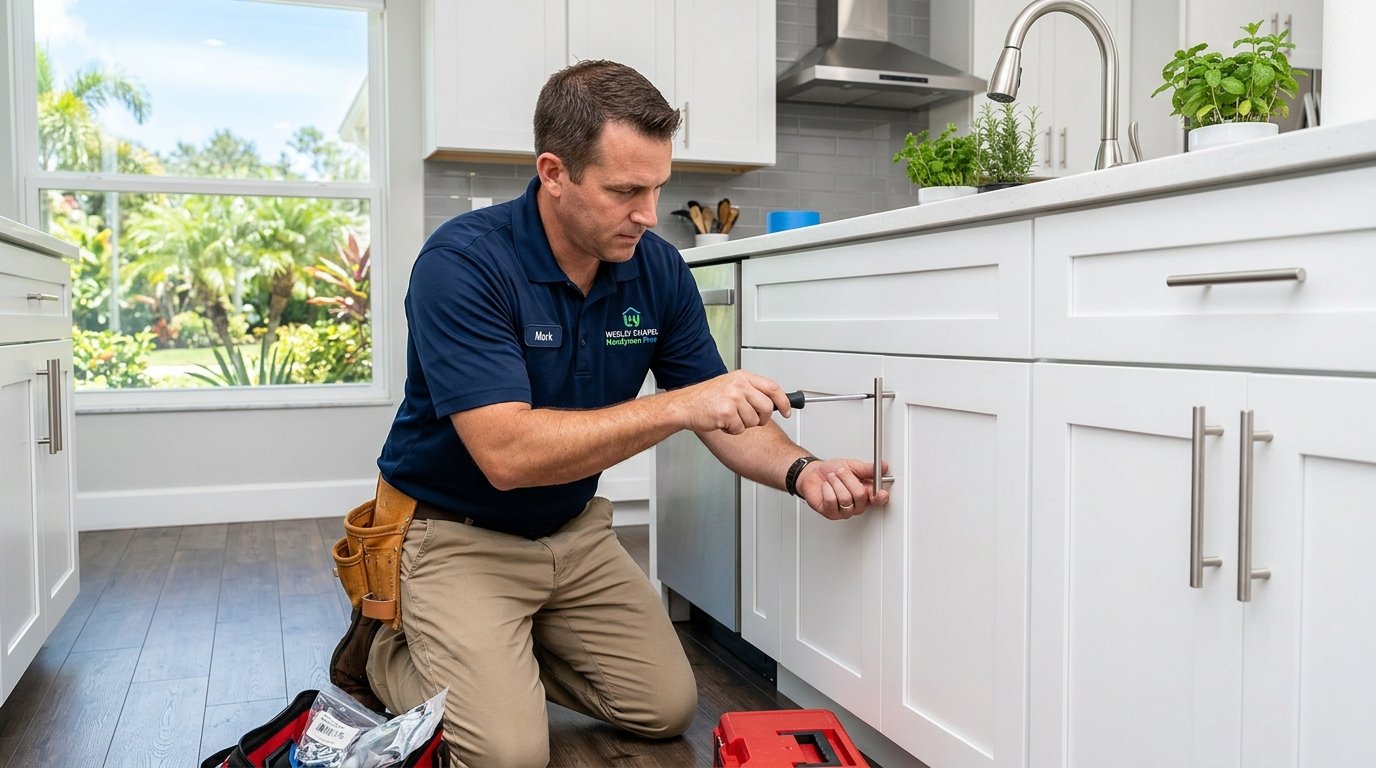
Florida DBPR guidance distinguishes non-regulated work such as painting, cabinets, flooring, and drywall that does not involve load-bearing, plumbing, electrical, or air-conditioning work from regulated electrical, plumbing, HVAC, roofing, structural, and other licensed work. Local permit or competency requirements may also apply. Wesley Chapel Handyman Pros limits its advertised services accordingly.
The phrase “home repair” is too broad to answer a permit question. Replacing a shelf or patching drywall is not the same as changing framing, moving plumbing, adding a circuit, or altering a roof. The work description needs to be specific before anyone can decide the right path.
Describe the planned work in plain language and confirm requirements with the appropriate local office when the project moves beyond minor repair and replacement work. Do not use a handyman to bypass requirements that apply to a regulated trade.
For Wesley Chapel homeowners, a useful project plan also considers Florida humidity, storm-season interruptions, material availability, and whether the work touches an area that recently had water intrusion. Those details can change the order in which repairs should happen.
Confirm preparation, installation or repair, cleanup, and any finish work that is part of the visit.
For homeowner-selected items, confirm model compatibility before the appointment. For repair materials, discuss what must match the existing surface.
Ask what conditions would require another trade, added materials, drying time, or a change in scope.
Keep texts, photos, invoices, product information, and notes together—especially after a storm or during a sale.
If you are ready to move from planning to repair, see Handyman Services in Wesley Chapel, FL. You can also review the full service list.
The useful part of a handyman permit requirements discussion is turning a broad question into a specific project description. Write down the quantity of items, where they are located, what changed, and what result you want. Add dimensions when size affects the work and include the exact model for anything you already purchased. A short, complete description is much more useful than a one-line request for a price.
Next, separate known facts from assumptions. You may know that a wall is stained, a door sticks, a door rubs at the frame, or a door rubs at the top. You may not yet know why. Keeping that distinction clear helps prevent a repair decision from being built on the wrong cause.
Some work has dependencies. Active leaks must be stopped before damaged drywall is rebuilt. Surfaces may need drying before patching or paint. Heavy mounting depends on suitable support. A replacement fixture must be compatible with the existing location. Storm work may require major roof, electrical, or structural repairs before a smaller punch list makes sense.
Finally, decide what information you want before work starts: what is included, who supplies selected materials, what conditions could change the scope, and whether another trade might be required. A clear project conversation makes timing, cost, and finish expectations easier to understand.
Project size and project type are not the same thing. A physically small change can still touch regulated electrical, plumbing, structural, or other work. Describe the exact planned change to the appropriate local office when there is any doubt about required permits or licensed-trade involvement.
Before you approve work, ask what assumptions the estimate depends on. Confirm whether selected materials or hardware are included, what surface preparation is expected, and what would require the scope to change. A useful estimate should describe the actual project rather than rely on a broad job label.
For homeowners managing several repairs, it can help to separate “must function now” items from appearance-only work. Doors that need to secure, active moisture concerns, loose safety hardware, and unstable items usually deserve attention before paint touch-up or decorative mounting.
Share your repair list by phone or text so we can understand the scope before scheduling.
Usually not from a title alone. Photos, dimensions, product details, and a complete task list can narrow the scope, but access and hidden conditions still matter.
No. Compare what is included, whether materials and cleanup are addressed, and whether the person doing the work is staying within an appropriate scope.
Often, yes. Grouping compatible tasks can make scheduling and setup more efficient. Mention the full list before the visit.
Describe the exact work and use the appropriately qualified trade when the project involves regulated, structural, major electrical, major plumbing, roofing, HVAC, or other specialized work.